How to Check If the Odometer Is Tampered on a Pre-Owned Luxury Car in India
Odometer Fraud — India's Most Common Used Car Scam
A car with 30,000 km on the clock looks like a steal. Low mileage, minimal wear, years of life left — the perfect pre-owned buy. But what if that car actually ran 1,10,000 km and someone simply rolled the meter back? This isn't a hypothetical scenario. Odometer tampering is one of the most widespread frauds in India's used car market. Some estimates suggest that up to 1 in 3 used cars in the unorganised market have tampered odometers.
The consequences of buying a car with a rolled-back odometer are serious — you're overpaying for a vehicle that's closer to end-of-life than you think. Engine wear, gearbox fatigue, suspension degradation, and brake system wear are all directly tied to kilometres driven. A car showing 30,000 km but actually at 1,10,000 km could need ₹2-5 lakh in repairs within a year.
The good news? Luxury cars from BMW, Mercedes-Benz, Audi, Jaguar, Land Rover, and Porsche have multiple built-in systems that make odometer tampering far more detectable than on regular cars — if you know where to look. This guide covers every method, from high-tech QR codes to simple visual checks.
1. Scan the Manufacturer's QR Code
This is one of the most powerful and least-known tools available to buyers of pre-owned luxury cars. Most modern luxury vehicles — particularly BMW, Mercedes-Benz, Audi, and Porsche — come with QR codes embedded on critical components like the windshield, engine bay sticker, B-pillar, or door jamb. These QR codes are placed during manufacturing and are linked to the car's unique VIN (Vehicle Identification Number).
How to use it:
- Locate the QR code — common locations include the lower-left corner of the windshield, the driver's door jamb sticker, and the engine bay data plate.
- Scan it using your phone's camera or a QR code reader app.
- The code typically links to the manufacturer's database, revealing the car's production date, original specifications, and in some cases, service milestones logged by authorised dealers.
What it tells you: If the QR code data shows the car was produced in 2018 and delivered in early 2019, but the seller claims it's a 2020 model — that's an immediate red flag. More importantly, some manufacturer databases store odometer readings recorded during warranty services, giving you a verified mileage checkpoint to compare against the current odometer.
Pro tip: If the QR code sticker is missing, damaged, or looks like it's been re-applied, treat it as suspicious. Tamperers often remove or replace these stickers because they know the data contradicts their claims.
2. Cross-Check Service History Records
This is the single most reliable method of verifying true mileage, and it applies to every car — luxury or otherwise. Every time a car is serviced at an authorised workshop, the odometer reading is logged alongside the date and work performed. This creates a chronological trail of the car's actual usage over its lifetime.
How to use it:
- Request the complete service booklet or digital service record from the seller. For luxury brands, these are usually maintained as stamped physical booklets and parallel digital records in the manufacturer's system.
- Check the odometer reading at each service entry. The readings should increase consistently — typically 10,000-15,000 km per year for average Indian usage, or 20,000-25,000 km for highway-heavy users.
- Contact the authorised service centre directly. BMW, Mercedes, Audi, and Jaguar dealerships can pull up the car's complete service history using the VIN. This data is stored centrally and cannot be altered by the seller.
What to look for:
- Sudden drops in mileage: If the service record shows 72,000 km in March 2024 and the odometer now reads 45,000 km, the meter has been rolled back. This is the clearest proof of tampering.
- Missing entries: Gaps in the service record — especially during the period just before the car was put up for sale — suggest records were removed to hide higher mileage readings.
- Inconsistent intervals: A car serviced every 8,000-10,000 km suddenly showing a 3,000 km gap between the last service and current reading is suspicious.
Pro tip: Don't rely solely on the seller's photocopies. Call the authorised service centre, provide the VIN, and ask them to verify the last recorded mileage on their system. This 5-minute phone call can save you lakhs.
3. Judge Wear Against the Car's Age and Launch Date
Every car tells a story through its physical condition — and that story should match the odometer reading. This method combines common sense with observation: look at when the car model was launched, when this specific unit was purchased, and how much wear it shows relative to its claimed mileage.
The calculation is simple:
- Check the model's launch date in India and the specific car's registration date (available on the RC or VAHAN portal).
- Calculate the number of years the car has been on the road.
- Multiply by the average annual usage for that type of owner. In India, the typical range is 10,000-15,000 km/year for city-driven luxury cars, and 18,000-25,000 km/year for cars used for long commutes or highway travel.
- Compare this estimate against the odometer reading. A significant mismatch warrants deeper investigation.
Example: A BMW 5 Series registered in January 2019 has been on the road for about 7 years. At average usage of 12,000 km/year, you'd expect roughly 84,000 km. If the odometer shows 35,000 km, that's suspiciously low — either the car was barely driven (possible but rare), or the odometer has been tampered with. Verify with service records before proceeding.
What wear looks like at different mileages:
| Mileage Range | Expected Condition |
|---|---|
| Under 30,000 km | Near-new interior, original tyres possible, minimal steering wheel wear, crisp pedal rubbers |
| 30,000-60,000 km | Slight steering wheel polish, light seat bolster wear, pedal rubbers showing use, likely on 2nd set of tyres |
| 60,000-1,00,000 km | Visible steering wheel wear, noticeable seat bolster compression, worn pedal rubbers, suspension slightly softer |
| Above 1,00,000 km | Significant steering/seat wear, dashboard buttons showing polish, possible interior rattles, suspension noticeably softer |
If a car claims 28,000 km but the steering wheel is shiny and smooth, the pedal rubbers are worn flat, and the driver's seat has clear compression on the bolster — the numbers don't add up.
4. Use OBD-II Diagnostics to Read ECU Mileage Data
Modern luxury cars store odometer data in multiple Electronic Control Units (ECUs) throughout the vehicle — not just the instrument cluster. The engine ECU, transmission ECU, body control module, and infotainment system each independently log mileage. A basic odometer rollback typically only changes the instrument cluster reading, leaving the other ECUs untouched.
How to use it:
- An OBD-II diagnostic scanner (available from ₹2,000 for a basic Bluetooth unit, or ₹15,000-25,000 for a professional-grade tool) plugs into the car's diagnostic port, usually located under the dashboard near the steering column.
- For BMW, use BMW-specific software like ISTA or Bimmerlink. For Mercedes, use Xentry or Star Diagnostics. For Audi/VW group, use VCDS or OBDeleven. These tools can read stored mileage values from multiple ECUs.
- Compare the mileage stored in the engine ECU, transmission ECU, and instrument cluster. If the instrument cluster shows 40,000 km but the engine ECU shows 95,000 km, the cluster has been tampered with.
What it costs: A professional diagnostic scan at an authorised service centre costs ₹2,000-5,000 and takes about 30 minutes. For a car priced at ₹20-50 lakh, this is the cheapest insurance you can buy.
Pro tip: Many tamperers in India only roll back the dashboard odometer using cheap Chinese tools — they don't touch the deeper ECU logs because it requires expensive manufacturer-level equipment and expertise. This means a diagnostic scan catches the majority of odometer fraud on luxury cars.
5. Check the Tyre and Brake Wear
Tyres and brakes are consumables that wear in direct proportion to kilometres driven. They're difficult to fake and provide a reliable cross-reference against the claimed mileage.
Tyres:
- Original luxury car tyres (Michelin, Continental, Pirelli, Bridgestone) typically last 40,000-60,000 km depending on driving style and road conditions.
- Check the tyre brand and manufacturing date (the DOT code on the sidewall shows the week and year of manufacture). If the car claims 25,000 km but is on its third set of tyres, the real mileage is much higher.
- Conversely, if the car shows 25,000 km but has brand-new tyres with no reason — that's suspicious. Why would someone replace tyres at such low mileage? Often, the answer is that the old tyres showed wear inconsistent with the rolled-back odometer.
Brakes:
- Brake pads on luxury cars typically last 40,000-60,000 km for front and 60,000-80,000 km for rear.
- Brake disc thickness can be measured — heavily worn or scored discs on a 'low mileage' car are a giveaway.
- If the car has had brake pad replacements (visible in the service record), cross-reference the mileage at replacement. Pads replaced at 55,000 km on a car now showing 30,000 km on the odometer is obvious tampering.
6. Inspect Interior Wear Patterns
The interior of a car is surprisingly honest. Unlike external bodywork — which can be repainted and polished to look new — interior wear is cumulative and very hard to reverse convincingly.
Key areas to inspect:
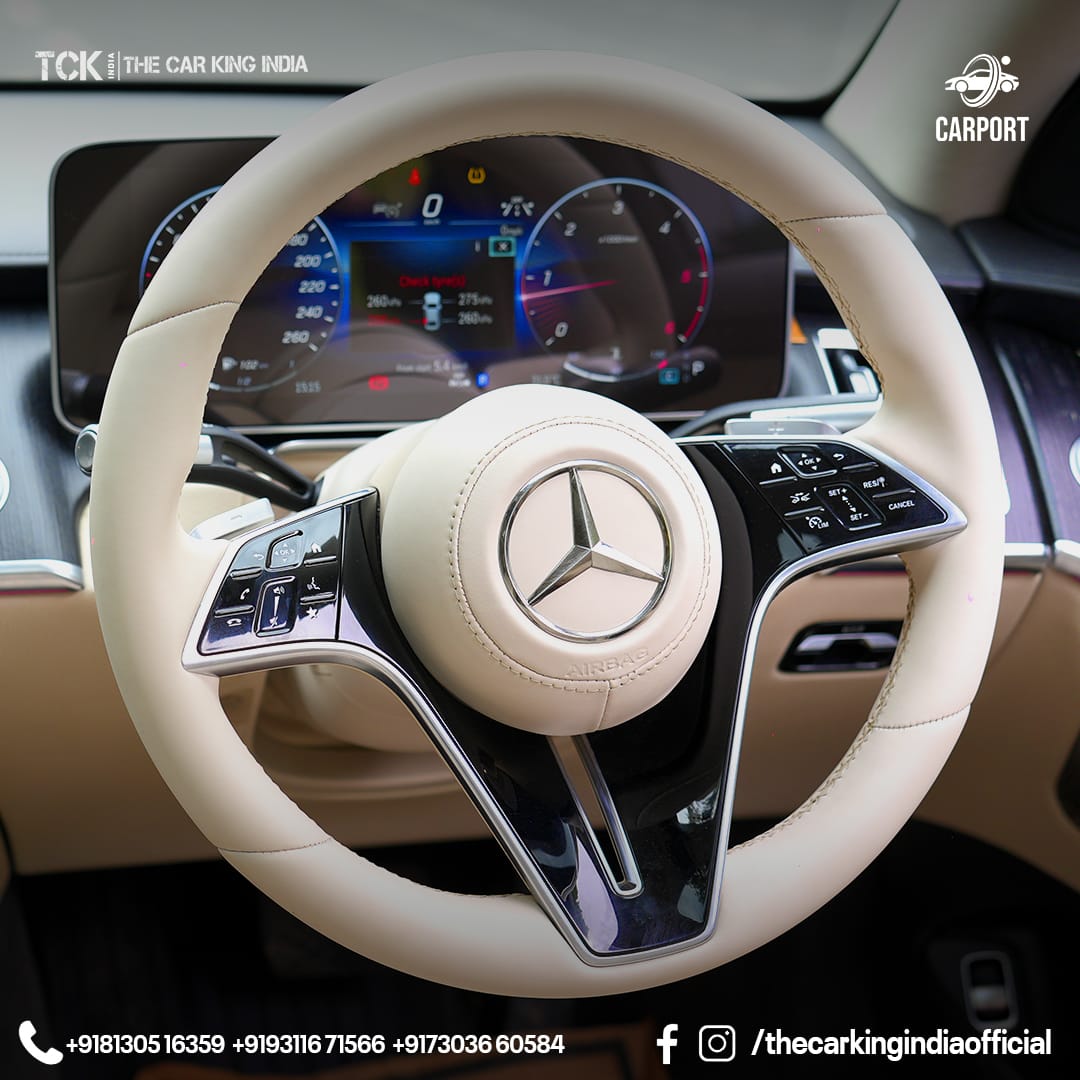
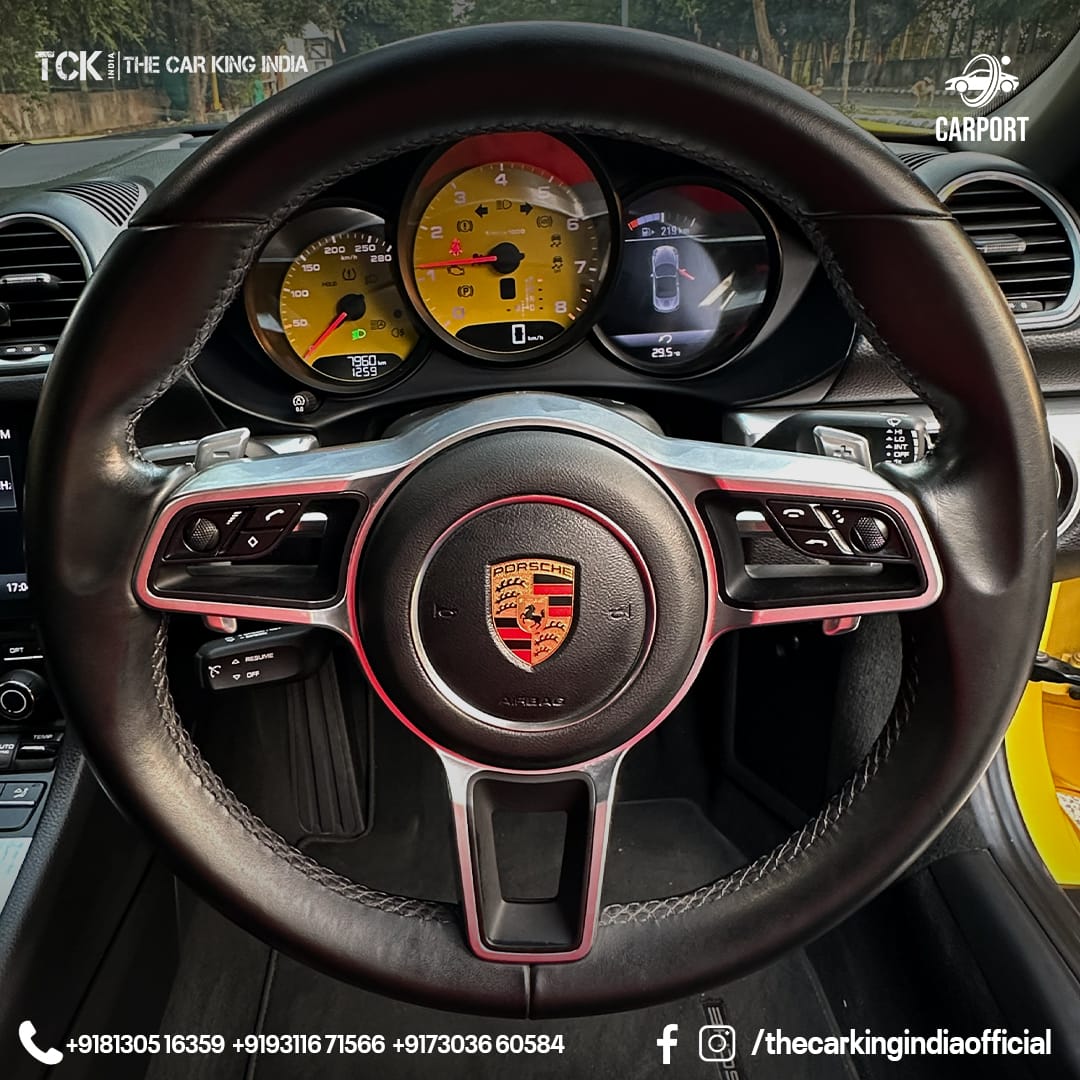
- Steering wheel: The 9 o'clock and 3 o'clock positions (where hands naturally grip) show wear first. A leather steering wheel on a car with genuine 20,000 km should feel textured and slightly grippy. If it's smooth and shiny, the car has been driven significantly more.
- Pedal rubbers: The accelerator, brake, and clutch pedals (on manual cars) have rubber covers that wear with use. Worn-flat pedal rubbers on a 'low mileage' car are a contradiction.
- Driver's seat bolster: The side bolster on the driver's seat — the part your thigh presses against when getting in and out — compresses and wears over time. A collapsed or creased bolster on a car claiming 25,000 km suggests three to four times that mileage.
- Gear selector and armrest: The leather or chrome on the gear selector and centre armrest develops a polished, worn look with high usage. Compare the driver's side wear with the passenger side — the driver's side should always show more wear.
- Floor mats and carpet: Heavy wear on the carpet beneath the floor mats, especially on the driver's side, indicates high mileage regardless of what the odometer says.
The new interior trap: Some sophisticated tamperers replace worn interior parts — new steering wheel wrap, new pedal rubbers, re-upholstered seats — to make a high-mileage car look fresh. If the interior looks too new for the car's age, that's actually suspicious. Cross-check with the service history and ECU data.
7. Check the Insurance and RTO Records
Insurance companies and the RTO record odometer readings at various touchpoints — and these records are harder to manipulate than the car itself.
Insurance records:
- Every insurance claim and renewal involves an inspection that logs the odometer reading. Request the complete insurance history (all renewals, not just the current policy) from the seller.
- If the car was insured for 5 years and each renewal shows progressively higher mileage — say 15,000 km, 28,000 km, 44,000 km, 58,000 km — but the odometer now reads 32,000 km, the rollback is documented in black and white.
- Insurers can also provide claim history — a car with a major claim at a recorded mileage of 80,000 km that now shows 40,000 km has been clearly tampered with.
RTO records:
- During ownership transfers and fitness certificate renewals, some RTOs record the odometer reading. Check the VAHAN portal or request records from the RTO.
8. Get a Professional Pre-Purchase Inspection (PPI)
If you're spending ₹15-50 lakh on a pre-owned luxury car, a professional PPI is not optional — it's essential. A qualified inspector combines all the checks above into a single comprehensive report and has the experience to spot patterns that casual buyers miss.
What a PPI covers:
- Full diagnostic scan across all ECUs with mileage cross-referencing
- Physical inspection of wear markers (tyres, brakes, interior, underbody)
- Service history verification through the manufacturer's database
- QR code and VIN cross-checking
- Accident history and structural integrity assessment
Where to get one:
- Authorised brand service centres (BMW, Mercedes, Audi) offer PPI services — typically ₹3,000-8,000 depending on the brand and depth of inspection.
- Independent specialists like Mahindra First Choice Wheels and other certified inspection services offer comprehensive reports for ₹2,000-5,000.
The ₹5,000 you spend on a PPI could save you ₹5 lakh in unexpected repairs on a car whose true mileage was hidden from you.
Quick Reference: Odometer Verification Checklist
| Check | What to Look For | Red Flag |
|---|---|---|
| QR Code Scan | Production date, VIN, service milestones | QR missing, damaged, or data contradicts seller's claims |
| Service History | Odometer readings at each service entry | Mileage drops between entries, missing records, gaps before sale |
| Age vs Mileage Math | Years on road × 10,000-15,000 km/year | Claimed mileage far below the calculated estimate |
| OBD-II Diagnostic Scan | Mileage stored in engine, gearbox, and body ECUs | ECU mileage doesn't match instrument cluster |
| Tyre Condition | Tyre age, brand, tread depth, replacement history | Multiple tyre replacements on a 'low mileage' car |
| Brake Wear | Pad thickness, disc condition, replacement records | Heavily worn brakes inconsistent with claimed mileage |
| Interior Wear | Steering wheel, pedals, seat bolsters, armrest | Heavy wear on a car claiming under 30,000 km |
| Insurance Records | Odometer readings at each renewal and claim | Current reading lower than previously recorded readings |
Why This Matters More for Luxury Cars
Odometer fraud on a Maruti Swift might cost you a few unexpected repairs. Odometer fraud on a BMW 5 Series or Mercedes E-Class can cost you ₹3-8 lakh in a single year. Luxury cars have tighter service intervals, more expensive consumables, and components like air suspension, turbochargers, and dual-clutch gearboxes that have defined lifespans measured in kilometres. A car at 1,00,000 km needs fundamentally different attention than one at 40,000 km — and if you're budgeting for the latter while actually owning the former, you'll be blindsided by repair bills.
The Safest Way to Buy — Let the Experts Handle It
At The Car King India, every car in our inventory undergoes a comprehensive verification process that includes diagnostic scanning, service history cross-referencing, and thorough physical inspection. We don't sell cars with questionable odometer readings — period. When you buy from us, the mileage you see is the mileage the car has genuinely done.
Our team has inspected thousands of luxury cars and we know exactly what honest wear looks like versus a car that's been dressed up to hide its real history. That expertise is built into every car we sell.
Browse Our Verified Luxury Inventory
Every BMW, Mercedes, Audi, Jaguar, Range Rover, and Porsche in our collection comes with verified mileage, complete documentation, and transparent history. Explore our inventory and buy with confidence — no hidden surprises, no odometer games.